Monthly Food Budgeting Without Sacrificing Flavor

Monthly Food Budgeting Without Sacrificing Flavor
Start With a Monthly Number You Can Actually Use
Before picking a target, look at what you recently spent on groceries and dining out. Include everyone you feed, your dietary needs, and the weeks when your routine changes. Someone else’s grocery number may sound impressive, but it won’t help much if it doesn’t fit your household.
Keep food spending separate from rent, utilities, and other bills so you can see what’s happening. Then divide your monthly target into rough weekly amounts, reserving a small cushion for price changes or an extra grocery run. The Consumer Financial Protection Bureau’s budgeting resources can help if you’re working out how food fits into your broader spending plan.
A useful budget is not a list of foods you’re no longer allowed to buy. If a favorite sauce makes inexpensive lunches more appealing, it may deserve a place in the plan.

Give your budget flexible categories
Instead of treating every purchase alike, allow for meal-building staples, produce and proteins, convenient options, and flavor or fun. Those amounts are an example, not a formula.
Adjust the categories to your circumstances. If an easy meal helps you avoid an unplanned takeout order, convenience may deserve more room. If your pantry is full, you may need more fresh ingredients than staples this month.
Check the product’s listed specifications when evaluating give your budget flexible categories.
Featured in this guide
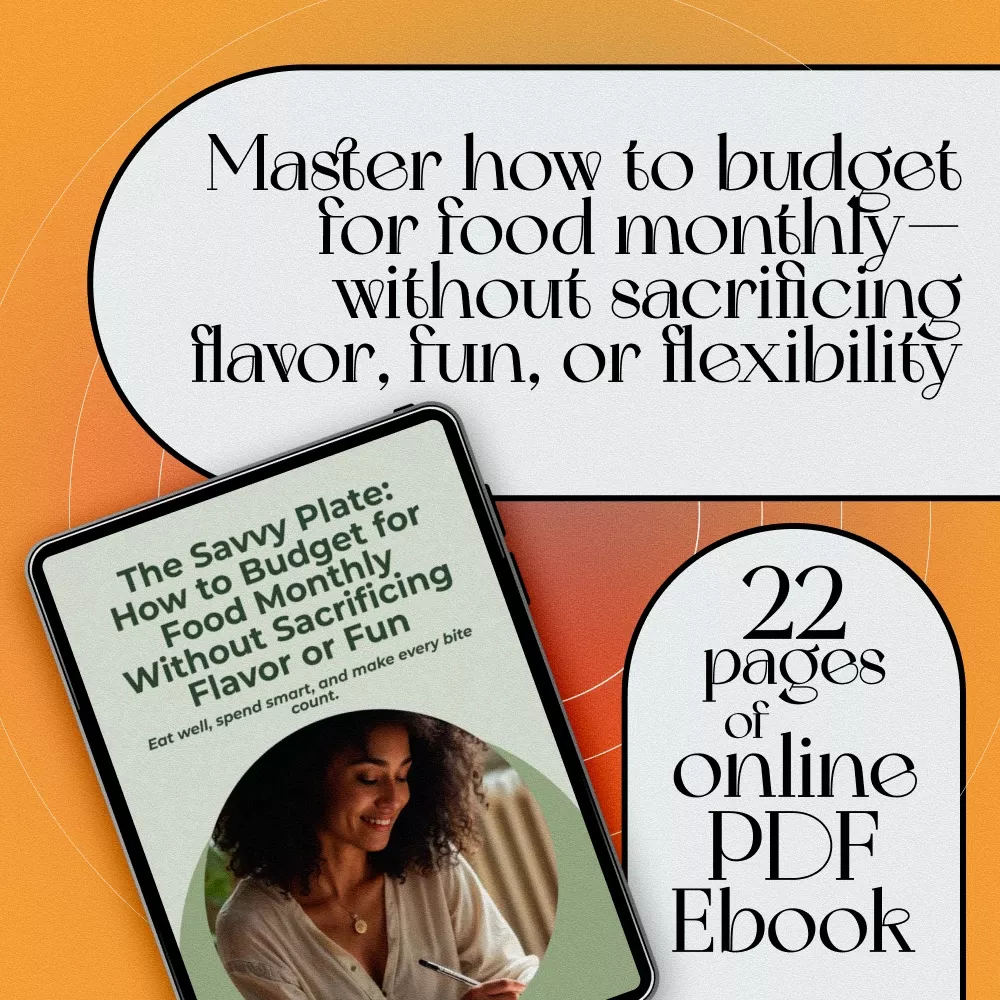
The Savvy Plate: How to Budget for Food Monthly Without Sacrificing Flavor or Fun | Budgeting eBook, Monthly Meal Planning Guide, Smart Grocery Checklist
Plan the month; shop for the week
Choose a loose set of meals you will realistically make, then plan each shopping trip around the coming week. Check your pantry and schedule before writing your list. Repeating flexible ideas such as tacos, soup, grain bowls, or pasta gives you direction without assigning a meal to every night.
Look for ingredients that can work in more than one dish. Beans, for instance, can become tacos, soup, or bowls with different vegetables and seasonings. Leave an easy-meal slot and a leftovers night so the plan can bend when your week does.
Keep flavor without rebuilding your pantry
Before buying everything for a new recipe, consider a different sauce, seasoning, texture, or cooking method for ingredients you already own. Compare unit prices when choosing package sizes, but only buy a larger amount if you can use it in time or store it safely.
Plan for a snack or special ingredient you genuinely want. An intentional purchase is easier to accommodate than a budget that leaves no room for enjoyment.
Make one small adjustment each week
Once a week, spend a few minutes reviewing what you spent, what remains in the kitchen, and what meals are ahead. If you spent more than expected, build the next list around food you have or postpone a nonessential purchase. One expensive week does not mean you need to abandon the month’s plan.
Check the product’s listed specifications when evaluating make one small adjustment each week.
Watch · product page video
“The Savvy Plate really helped me as a busy parent who loves good food but hates overspending. My kids are even getting into it with their favorite recipes now included in our monthly plan!”
Worthwhileoffervault product page · Product review
Compare related options such as Build Unshakable Confidence for Dating in 5 Days | Audio Program | Digital Download | Dating Confidence Training | Body Language & Conversation Skills to match features, dimensions, and use case before choosing.
FAQ
What does “financially savvy” mean?
It means making informed choices that fit your resources and priorities. For groceries, that can mean checking what you have, planning purchases, comparing value when useful, and keeping room for foods you enjoy.
What are 5 components of a budget?
For a food budget, five adaptable components are meal staples, produce and proteins, convenience foods, snacks or treats, and a small cushion for unexpected needs.
What is the 3-3-3 rule for savings?
There is no single 3-3-3 rule that everyone uses, so clarify which version you mean before applying it. For groceries, a monthly target, weekly lists, and a small cushion are more useful than an unfamiliar rule.
See if The Savvy Plate: How to Budget for Food Monthly Without Sacrificing Flavor or Fun | Budgeting eBook, Monthly Meal Planning Guide, Smart Grocery Checklist fits your setup













Leave a comment