Plan a Color-Coordinated Travel Wardrobe with AI
25% off on product page · save $2.00
Plan a Color-Coordinated Travel Wardrobe with AI

Choose Colors That Work Together
Begin with one or two base colors for pieces you expect to wear often: pants, a jacket, and shoes. Add one or two accent colors you enjoy wearing. Navy and cream with a green accent might work for you; black and gray with a bright red accent might work just as well. There is no single best color for travel. The useful palette is the one that helps your clothes combine easily and still feels like you.
Lay your candidates on a bed or floor before making a packing list. Put each top beside each bottom, then add the shoes and outer layer you would wear with them. This quick visual check can reveal that a top works with only one pair of pants—or that an overlooked layer ties several outfits together. Color is only part of the decision: fabrics, coverage, and formality must also suit your destination and plans.
Give AI boundaries, then make the call yourself
List the garments you own, your trip length, likely weather, activities, laundry access, and chosen colors. A written inventory is enough if you prefer not to share photos. Ask an AI tool to build complete outfits using only those items and to flag gaps separately from outfit ideas.
Try this prompt: “Plan outfits for my seven-day trip using only the clothes below. Account for these activities and the expected weather. Reuse pieces where practical, flag combinations that do not work, and list any essential gaps separately.”
Then try on unfamiliar combinations. Sit and walk in them. AI cannot tell you whether shoes remain comfortable after a long day or a layer feels warm enough to you. If you want a guided starting point, our Color-Coordinated Travel Wardrobe with AI guide can help you organize capsule-outfit and packing decisions; your comfort and plans still come first.
Check the product’s listed specifications when evaluating give ai boundaries, then make the call yourself.
Featured in this guide
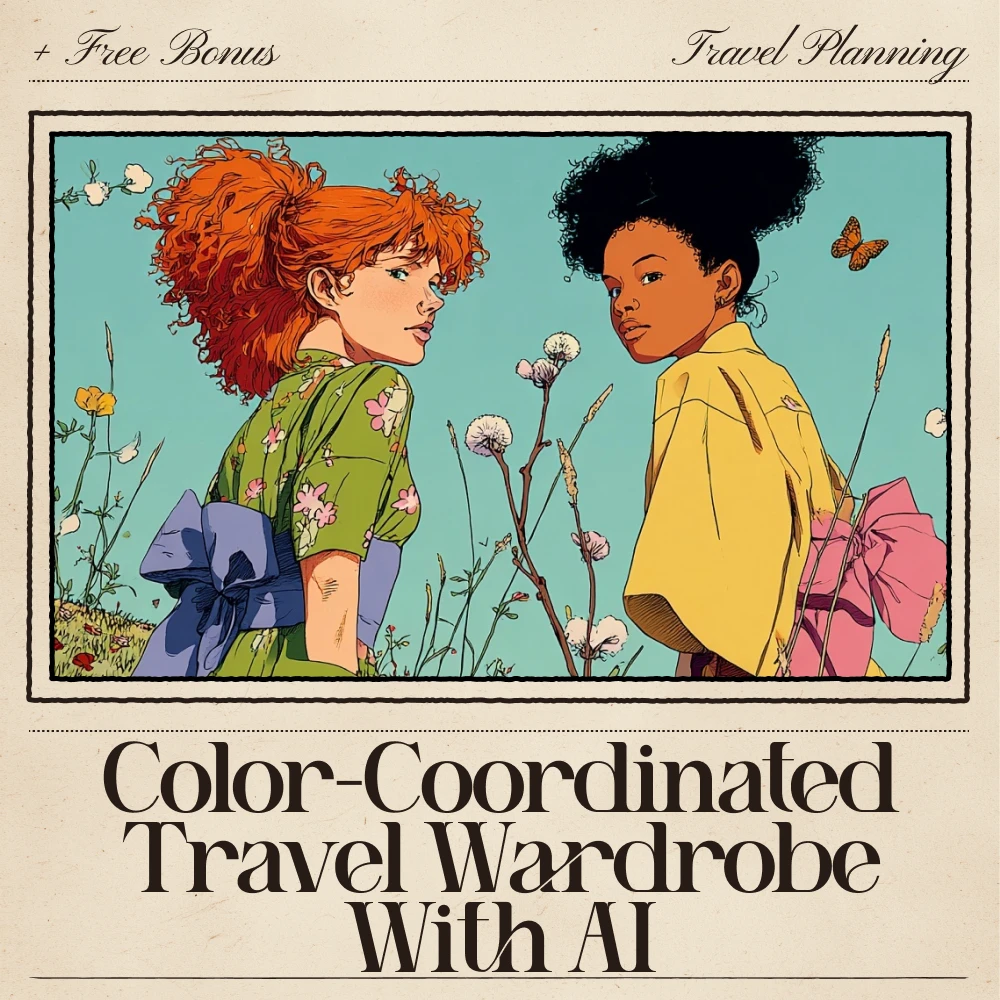
Color-Coordinated Travel Wardrobe with AI – Ultimate Guide for Effortless Packing, Capsule Outfits & ai to create a color coordinated travel wardrobe
Build around the trip, not a packing formula
Write down activities that need particular clothes or footwear before counting items. A museum day, a hike, and a dressy dinner may call for different choices even when everything shares a palette. Where practical, favor pieces with at least two planned uses, but keep necessary exceptions: suitable hiking shoes matter more than versatile shoes that cannot handle the trail.
Formulas such as 5-4-3-2-1 or 3-3-3 can help you begin, but they are not requirements. Weather, laundry access, and your actual plans should determine what stays in the bag.
Do a final day-by-day check
Assign an outfit to each day, including shoes and layers. Repeating a comfortable outfit is fine. Pack the planned items in your actual bag, then reconsider anything that has no clear use.
Close to departure, review the forecast and adjust your layers. Confirm your airline’s current baggage rules and any applicable security-screening guidance. If you use AI to organize other routines, our Using AI to Boost Daily Productivity guide offers a companion approach to planning everyday tasks.
FAQ
What is the 5-4-3-2-1 rule for packing?
Versions vary, but the rule commonly assigns decreasing item counts across clothing and accessory categories. Use it as a flexible framework rather than a universal list.
What is the best color to wear when traveling?
There is no single best color. Choose a base color you enjoy wearing that works with several other pieces you plan to pack.
What is the 3-3-3 rule capsule wardrobe?
The 3-3-3 rule is a small wardrobe challenge: choose three tops, three bottoms, and three pairs of shoes, then build outfits using only those nine pieces for a set period. It gives you a practical way to see what you actually wear before you buy more or pare down your closet. For a broader approach to building a capsule wardrobe, read our capsule wardrobe guide .
Is there a free AI outfit generator?
Yes. Some AI outfit generators let you create outfit ideas for free, though free access may limit how many looks you can make or which features you can use. You can also use a general-purpose AI chat tool to suggest combinations from clothes you already own, without needing a dedicated fashion app.
See if Color-Coordinated Travel Wardrobe with AI – Ultimate Guide for Effortless Packing, Capsule Outfits & ai to create a color coordinated travel wardrobe fits your setup










Leave a comment