AI Social Coach: Practice Real-Life Conversations
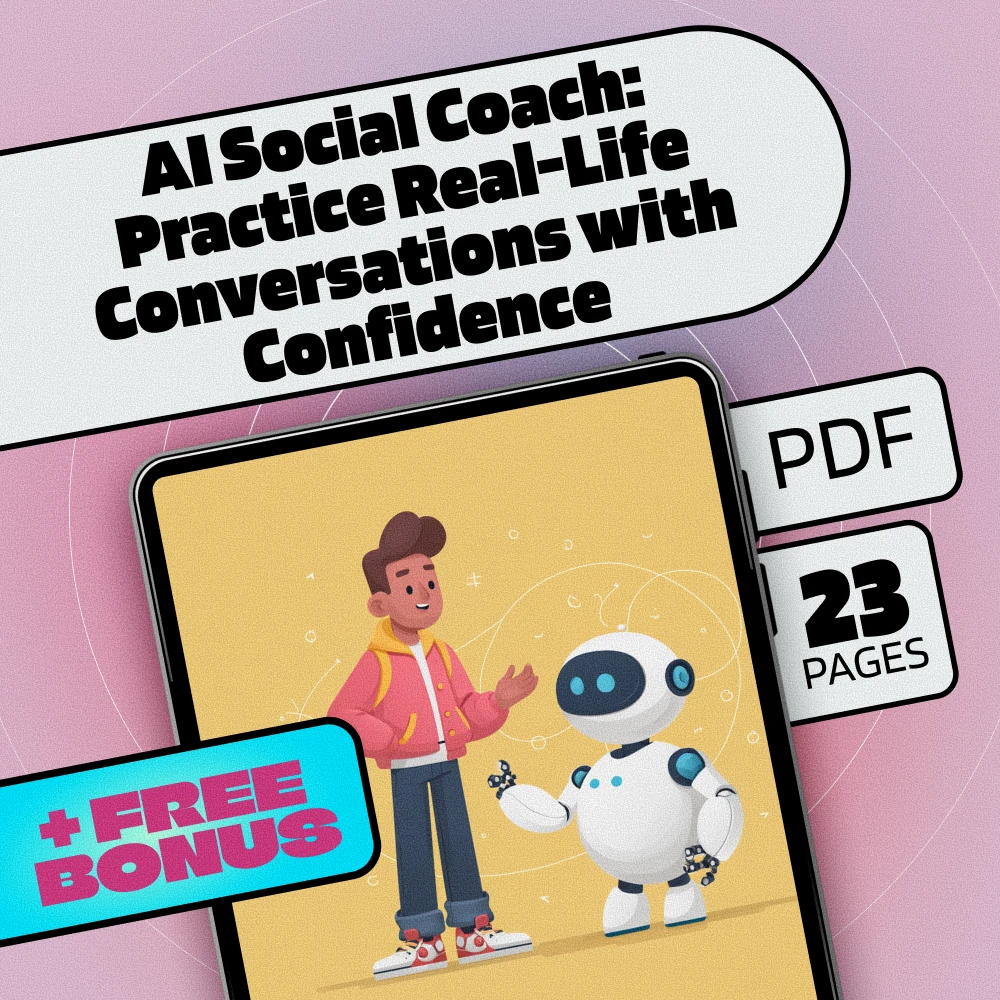
AI Social Coach: Practice Real-Life Conversations

Why Practice Conversations Before They Happen?
An unfamiliar situation can be easier to approach when you have already considered how to begin. For example, practicing “How do you know the host?” may give you a starting point at a gathering. Rehearsing a respectful refusal can also help you find words that feel natural before you need them.
Practice supports confidence, but it cannot guarantee how another person will respond. Real conversations depend on timing, context, and the choices both people make. The aim is to become more comfortable adapting, not to control the outcome.
Start with one situation you expect to encounter. You might choose introducing yourself to a neighbor, asking a coworker a follow-up question, or declining an invitation. A focused exchange is easier to repeat and adjust than an attempt to master every social skill at once.
Check the product’s listed specifications when evaluating why practice conversations before they happen.
A Simple Practice Routine
Choose a general-purpose AI tool and describe a scenario without sharing sensitive details. Explain where the conversation happens, your relationship to the other person, and what you want to practice.
- Set the scene. Ask the tool to role-play the other person.
- Try a short exchange. Respond in your own words for a few turns.
- Ask for feedback. Request observations about clarity and tone, plus one or two alternatives.
- Try again. Change your opening or response and notice what feels natural.
- Pick one idea. Try a small skill, such as a follow-up question, in a real conversation.
Leave out names, addresses, medical details, financial information, and other sensitive personal information. AI can misunderstand tone or miss context, so treat its feedback as a suggestion, not a verdict.
Check the product’s listed specifications when evaluating a simple practice routine.
Featured in this guide
AI Social Coach: Practice Real-Life Conversations with Confidence | Digital Guide for Social Skills Growth, eBook & Checklist | AI Practice for Real-Life Social Situations
Three Situations to Rehearse
- Meeting someone: Ask the AI to role-play a brief introduction at a social event. Try an opener such as “How do you know the host?”
- Keeping a conversation going: Ask it to talk about a recent hobby, then practice a follow-up question.
- Setting a boundary: Ask it to help you politely decline an invitation. You might say, “Thanks for inviting me, but I can’t make it.”
Offer another time only if you genuinely want to. You do not need to invent an excuse to make a refusal sound smoother.
Check the product’s listed specifications when evaluating three situations to rehearse.
Is the Guide Right for You?
Our AI Social Coach digital guide may suit you if you want a structured resource for practicing everyday social situations. It includes an eBook and checklist focused on social skills growth.
It is not an AI subscription or an interactive coaching service. Access to a separate AI tool is not included, so consider whether you are comfortable choosing and using one alongside the guide.
Take One Idea Into Everyday Life
Try a low-stakes opportunity: greet a neighbor, ask a cashier a simple question, or follow up on something a friend mentioned. Listen to the response and adjust if the other person seems interested, distracted, or ready to end the exchange.
Afterward, note one thing that felt comfortable and one thing you would like to practice next time. A brief conversation is still useful experience.
AI is a rehearsal aid, not a replacement for human connection or professional mental health care. If social anxiety causes significant distress or interferes with daily life, consider seeking support from a qualified professional.
Compare related options such as AI-Powered Marketing | Modern Marketing Strategy eBook for Marketers | Digital Download Guide for Using ai in marketing campaigns | AI Copywriting, Trend Analysis & Prompting Toolkit to match features, dimensions, and use case before choosing.
FAQ
Is there a free AI coach available?
Some general-purpose AI tools offer free access or free tiers, subject to their current terms. Our AI Social Coach digital guide is a separate paid product.
What is the 30% rule in AI?
There is no single, universally accepted 30% rule in AI; the phrase can mean different things depending on the context. Ask for the source and its definition before applying it to a decision.
Can ChatGPT be my life coach?
ChatGPT can help you reflect, explore ideas, and practice conversations, but its advice can be flawed. It is not a substitute for a qualified professional when you need professional support.
What are 7 human skills that AI cannot replace?
Seven valuable human skills include empathy, relationship building, ethical judgment, cultural awareness, adaptability, leadership, and listening. AI can support some related tasks, but it does not bring human experience or responsibility to them.
See if AI Social Coach: Practice Real-Life Conversations with Confidence | Digital Guide for Social Skills Growth, eBook & Checklist | AI Practice for Real-Life Social Situations fits your setup













Leave a comment