How Is AI Used in Marketing Today? Key Uses
20% off on product page · save $4.25
How Is AI Used in Marketing Today? Key Uses

Understanding Audiences and Trends
Marketers use AI to analyze customer data, identify patterns in purchasing behavior, and group audiences by shared characteristics, such as interests or past interactions. For example, you might use those insights to develop different messages for new customers and returning customers, rather than sending everyone the same promotion.
AI can also help you spot emerging topics in search activity, social conversations, or campaign results, giving your team ideas to investigate. Treat those patterns as starting points, not proof of what every customer wants, and consider whether the data is current and representative before making decisions.

Creating and Personalizing Content
Teams use generative AI to brainstorm campaign themes, draft email subject lines, outline articles, and produce variations of advertising copy. You can give a tool your audience, objective, tone, and key details, then revise its output to make sure it sounds like your brand and supports claims you can substantiate.
AI can also help tailor messages or product recommendations to different customer segments, making communications more relevant to the people receiving them. Personalization works best when you use customer information responsibly, respect privacy preferences, and avoid making assumptions that feel intrusive or inaccurate.

Featured in this guide
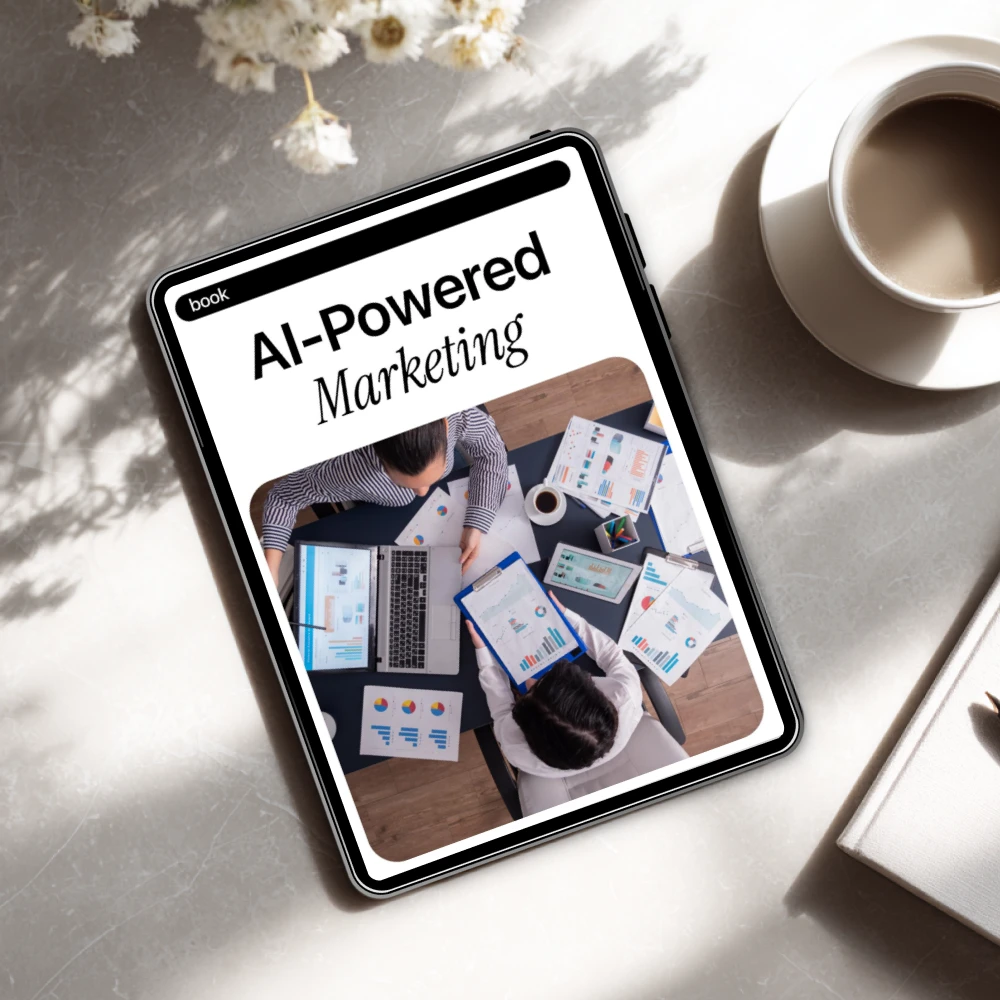
AI-Powered Marketing | Modern Marketing Strategy eBook for Marketers | Digital Download Guide for Using ai in marketing campaigns | AI Copywriting, Trend Analysis & Prompting Toolkit
Managing Campaigns and Measuring Results
Some marketing platforms use AI to assist with tasks such as adjusting ad bids, selecting audiences, or determining when to send messages. This can reduce repetitive work, but you should still set budgets and goals, review performance, and intervene when results or placements do not match your expectations.
AI can summarize campaign metrics and help you explore why one message or channel performed differently from another. Compare its suggestions with your own business context, and use tests to evaluate changes instead of assuming an AI-generated explanation establishes cause and effect.
Getting Started With AI in Marketing
Start with one manageable task, such as drafting three email subject lines or summarizing feedback from a recent campaign, and decide how you will evaluate the result. Remove sensitive information from prompts unless your organization has approved the tool and its data practices, and have a person review the final material before publication.
Our AI-Powered Marketing guide is a digital download for marketers covering AI copywriting, trend analysis, and prompting. Our team sees these topics as a useful starting point when you want to explore how AI can fit into your existing marketing workflow.
See if AI-Powered Marketing | Modern Marketing Strategy eBook for Marketers | Digital Download Guide for Using ai in marketing campaigns | AI Copywriting, Trend Analysis & Prompting Toolkit fits your setup













Leave a comment