Examples of AI in Marketing: Practical Ways to Get Started
20% off on product page · save $4.25
Examples of AI in Marketing: Practical Ways to Get Started

Content creation and copywriting
You can use AI to draft email subject lines, social media captions, product descriptions, and ad variations from a prompt that describes your audience, offer, and preferred tone. Our team recommends treating those drafts as starting points: edit them for accuracy and brand voice, and remove claims you cannot support.
AI can also help you repurpose an existing article into a short email or several social posts, giving you a practical way to adapt one idea for different channels. For example, you might ask for three caption options with different tones, then choose and revise the one that best suits your campaign.

Personalization and customer support
AI-powered recommendation systems can suggest products or content based on signals such as browsing behavior or past purchases, helping you present options that may be relevant to each visitor. A customer who browses running shoes, for example, might see related accessories rather than a generic selection of products.
Chatbots can answer common questions, guide visitors toward relevant information, or collect details before a human follows up. They are useful for routine conversations, but you should provide a clear way to reach a person when a question is sensitive, complicated, or outside the bot’s scope.

Featured in this guide
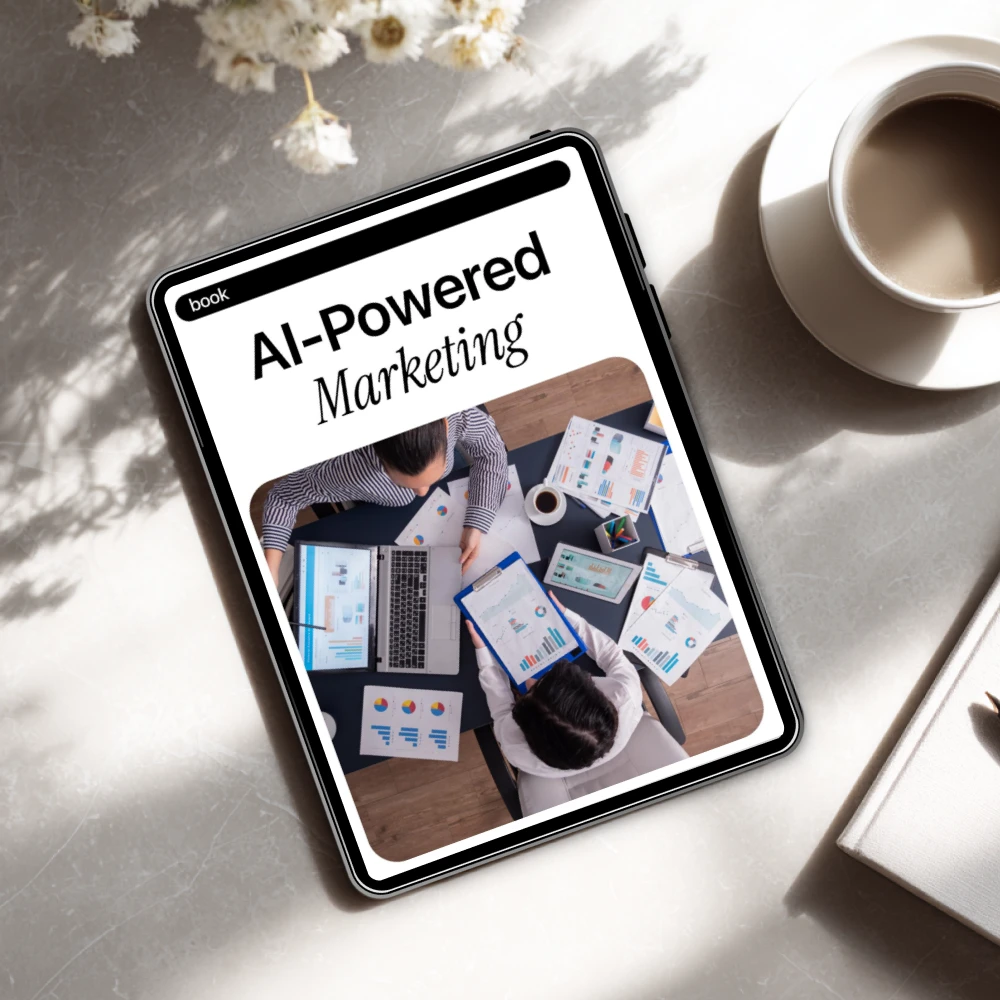
AI-Powered Marketing | Modern Marketing Strategy eBook for Marketers | Digital Download Guide for Using ai in marketing campaigns | AI Copywriting, Trend Analysis & Prompting Toolkit
Analysis and campaign optimization
AI can help you identify patterns in campaign data, such as which messages attract engagement or which customer groups respond differently to an offer. You can use those observations to form a hypothesis, then compare campaign results before deciding whether to change your budget or messaging.
Some advertising platforms use AI to help adjust bids, select audiences, or choose among creative variations as campaigns run. Automated decisions still need oversight: define your goal, review performance against it, and avoid assuming that every recommendation fits your business or your customers.
Planning your first AI use
Start with a specific task, such as generating subject-line ideas or summarizing feedback, and give the tool clear context about the audience and desired outcome. Review the result for errors and sensitive information before you publish or share it, and follow your organization’s privacy practices when handling customer data.
Our AI-Powered Marketing guide is a digital download for marketers that covers AI copywriting, trend analysis, and prompting. It offers a place to explore how these uses fit into a broader marketing strategy as you decide where AI belongs in your workflow.
FAQ
What is an example of AI in marketing?
A common example is using AI to draft several email subject lines for a promotion. You can compare the suggestions, revise them to match your voice, and test the final versions with your audience.
What are 10 examples of AI?
Examples include chatbots, product recommendations, email personalization, AI copywriting, image generation, trend analysis, customer segmentation, ad bidding, speech recognition, and fraud detection. In marketing, the most useful choice depends on the task you want to improve and the data you can use responsibly.
See if AI-Powered Marketing | Modern Marketing Strategy eBook for Marketers | Digital Download Guide for Using ai in marketing campaigns | AI Copywriting, Trend Analysis & Prompting Toolkit fits your setup













Leave a comment