How Can AI Be Used in Sales and Marketing?
20% off on product page · save $4.25
How Can AI Be Used in Sales and Marketing?

Find and Understand Potential Customers
AI can help you organize customer information, identify patterns in past purchases, and group prospects by shared interests or needs, making it easier for your sales and marketing teams to focus their efforts. For example, you might compare customer segments by the products they explore or the questions they ask, then use those insights to plan more relevant outreach.
Start with the customer data you already have permission to use, and define a practical question such as which audience might respond to a new offer. Treat AI-generated patterns as suggestions rather than facts, and review them for missing context or unfair assumptions before changing your strategy.

Create and Personalize Campaign Content
AI can help you brainstorm campaign themes and draft email subject lines, social posts, landing-page copy, and sales follow-up messages for different audiences. You can provide a clear brief with your audience, offer, desired tone, and call to action, then revise the output so it sounds like your business and accurately describes what you sell.
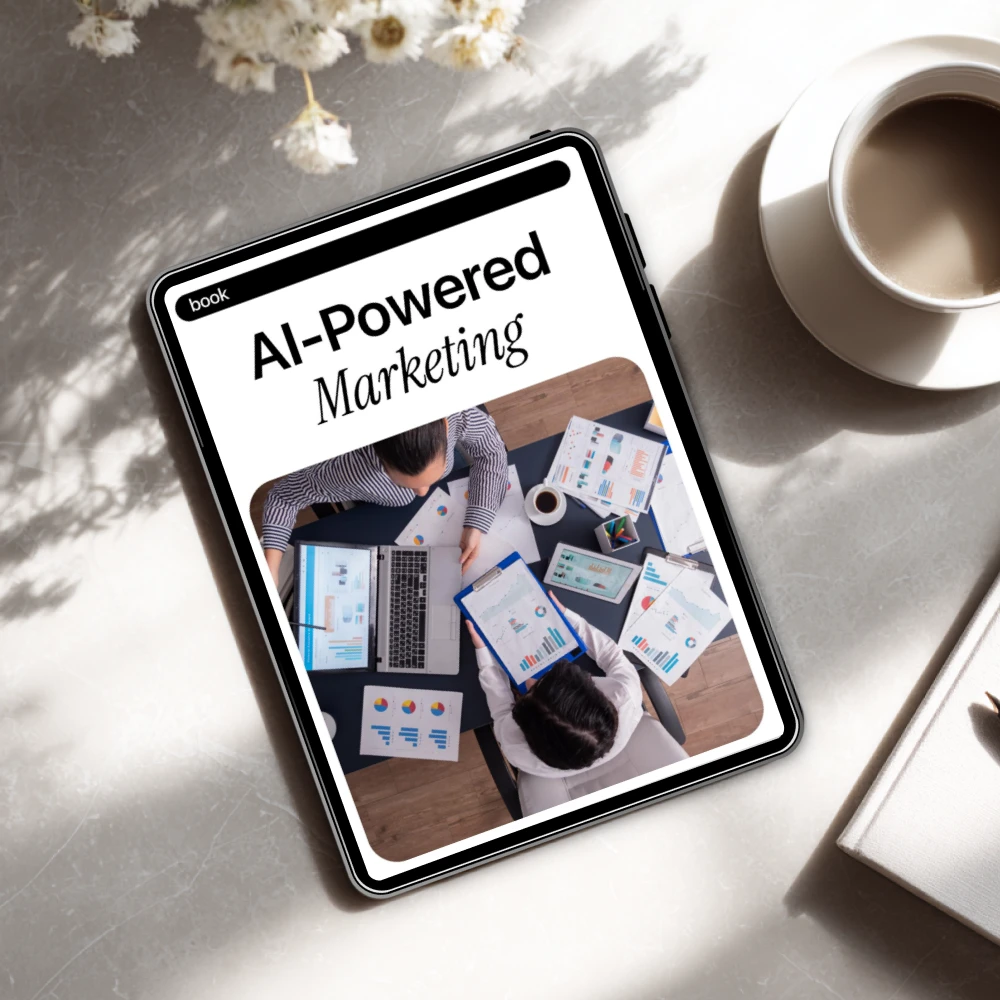
Personalization works best when it is based on a meaningful customer need rather than a name inserted into a generic message. Our AI-Powered Marketing guide covers topics including AI copywriting, trend analysis, and prompting for marketing campaigns.
Featured in this guide
AI-Powered Marketing | Modern Marketing Strategy eBook for Marketers | Digital Download Guide for Using ai in marketing campaigns | AI Copywriting, Trend Analysis & Prompting Toolkit
Support Sales Conversations
Your sales team can use AI to prepare for conversations by summarizing notes, organizing common objections, or drafting follow-up questions tailored to a prospect’s stated priorities. A representative selling a business service, for instance, might use a summary to revisit the prospect’s goals before writing a follow-up email.
Keep a person responsible for the final message, especially when it includes pricing, commitments, or product claims that must be accurate. Avoid entering confidential customer details into an AI tool unless your organization’s privacy policies and the tool’s data-handling terms allow it.
Test and Improve Your Marketing
AI can help you generate variations of an ad or email and organize campaign results so you can compare which messages attract engagement or lead to sales. Choose one element to test, such as a headline or call to action, and use a consistent measure so the comparison is useful.
Our team recommends pairing AI suggestions with your own judgment about customer experience and business goals. Review results regularly, keep what works, and investigate unexpected changes before assuming the tool has identified a reliable trend.
FAQ
How is AI used in sales and marketing?
AI is used to analyze customer patterns, draft campaign content, support sales follow-ups, and organize performance information. You can use it to speed up routine work while keeping people responsible for accuracy, privacy, and customer relationships.
What are five ways AI can be used in marketing?
Five uses are audience segmentation, content drafting, campaign personalization, trend analysis, and testing message variations. Choose the uses that address a specific marketing goal, and review the output before putting it in front of customers.
See if AI-Powered Marketing | Modern Marketing Strategy eBook for Marketers | Digital Download Guide for Using ai in marketing campaigns | AI Copywriting, Trend Analysis & Prompting Toolkit fits your setup













Leave a comment