AI-Powered Marketing: Copywriting, Trends & Campaigns
20% off on product page · save $4.25
AI-Powered Marketing: Copywriting, Trends & Campaigns

What AI-Powered Marketing Means
AI-powered marketing means using AI tools to support work such as research, content creation, audience analysis, and campaign optimization. You might ask a tool to group customer questions by topic, draft several headline options, or summarize performance data you provide.
Speed is useful, but an answer that sounds confident is not necessarily correct. Review factual statements, compare audience suggestions with what you know about your customers, and edit copy to reflect your brand. If a tool generates a statistic or citation, find the original source before using it.
Responsible use also includes being careful about the claims you make about your own products. The Federal Trade Commission’s guidance on AI claims is a useful reminder to support marketing statements with evidence.
Build a Campaign Workflow
Start by defining your goal, audience, offer, and channel. Then choose one task where AI could help, such as generating headline variations or organizing customer questions.
- Planning: Compare suggested audience questions with what you know about your customers.
- Copywriting: Check claims and edit drafts for your brand voice.
- Trend analysis: Review sources, dates, and context.
- Optimization: Choose a meaningful measure and evaluate the result.
A rough brainstorm may need a quick relevance check; a published offer requires careful review of pricing, eligibility, and factual claims.
Featured in this guide
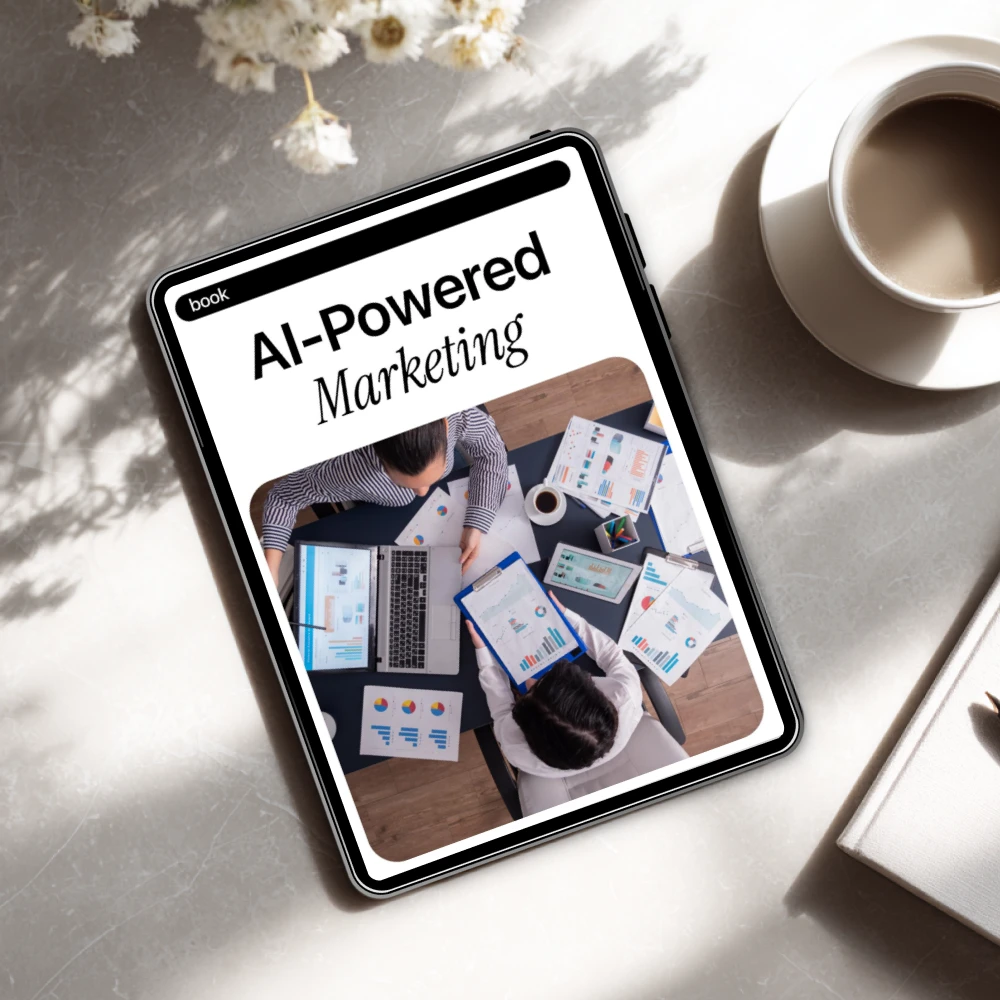
AI-Powered Marketing | Modern Marketing Strategy eBook for Marketers | Digital Download Guide for Using ai in marketing campaigns | AI Copywriting, Trend Analysis & Prompting Toolkit
Give AI Better Instructions
Include your audience, objective, channel, tone, constraints, and desired format. For example: “Write three email subject lines for independent bookstore owners. Invite them to a free 30-minute inventory-planning webinar. Use a friendly, direct tone, keep each line under 45 characters, and do not add claims about sales results.”
Review the options and ask for a more conversational tone or clearer invitation if needed. Before entering information into a tool, check its privacy settings and your organization’s policies. Avoid sharing customer records, confidential plans, or other sensitive material without authorization and appropriate protections.
Use Trends Without Chasing Every One
AI can help you group recurring questions in customer feedback or summarize industry material you provide. Check original sources and publication dates before treating a summary as evidence, then decide whether the pattern matters to your audience and goal.
Test a promising idea on a small scale. Choose a baseline, such as the registration rate from a comparable email, and define what you will measure. Account for differences in audience and timing before deciding whether to expand the test.
Explore the AI-Powered Marketing eBook
Our AI-Powered Marketing eBook is a digital guide for marketers interested in AI copywriting, trend analysis, and practical ways to guide AI tools. It is a useful choice if you want to connect those tasks to campaign planning rather than treat them as isolated experiments.
For ideas beyond campaigns, pair it with our Using AI to Boost Daily Productivity guide. Its broader focus on workflows, creativity, and time management can help you consider where AI fits into your working day.
Before choosing, compare the product details with your daily routine, available space, care needs, and preferred setup. The strongest option is usually the one that fits the intended use clearly and remains simple to clean, store, and check before repeat use.
FAQ
Is there such a thing as AI marketing?
Yes. AI marketing uses AI tools to support tasks such as audience research, content drafting, and campaign analysis, with people directing and reviewing the work.
What is the 3-3-3 rule in marketing?
The term is used for different marketing frameworks, so its meaning depends on the source. Ask which specific framework is intended before applying it to a campaign.
Can I make $1,000 a day using AI?
It is possible to earn income while using AI, but no daily amount is guaranteed. Results depend on your offer, skills, customer demand, expenses, and execution.
What is AI-powered marketing?
AI-powered marketing uses artificial intelligence to help businesses understand customers, create content, and decide when and where to reach people. For an online store, that might mean suggesting products based on browsing behavior or sending a reminder after a shopper leaves items in a cart. Explore the broader guide to AI-powered marketing .
See if AI-Powered Marketing | Modern Marketing Strategy eBook for Marketers | Digital Download Guide for Using ai in marketing campaigns | AI Copywriting, Trend Analysis & Prompting Toolkit fits your setup













Leave a comment